
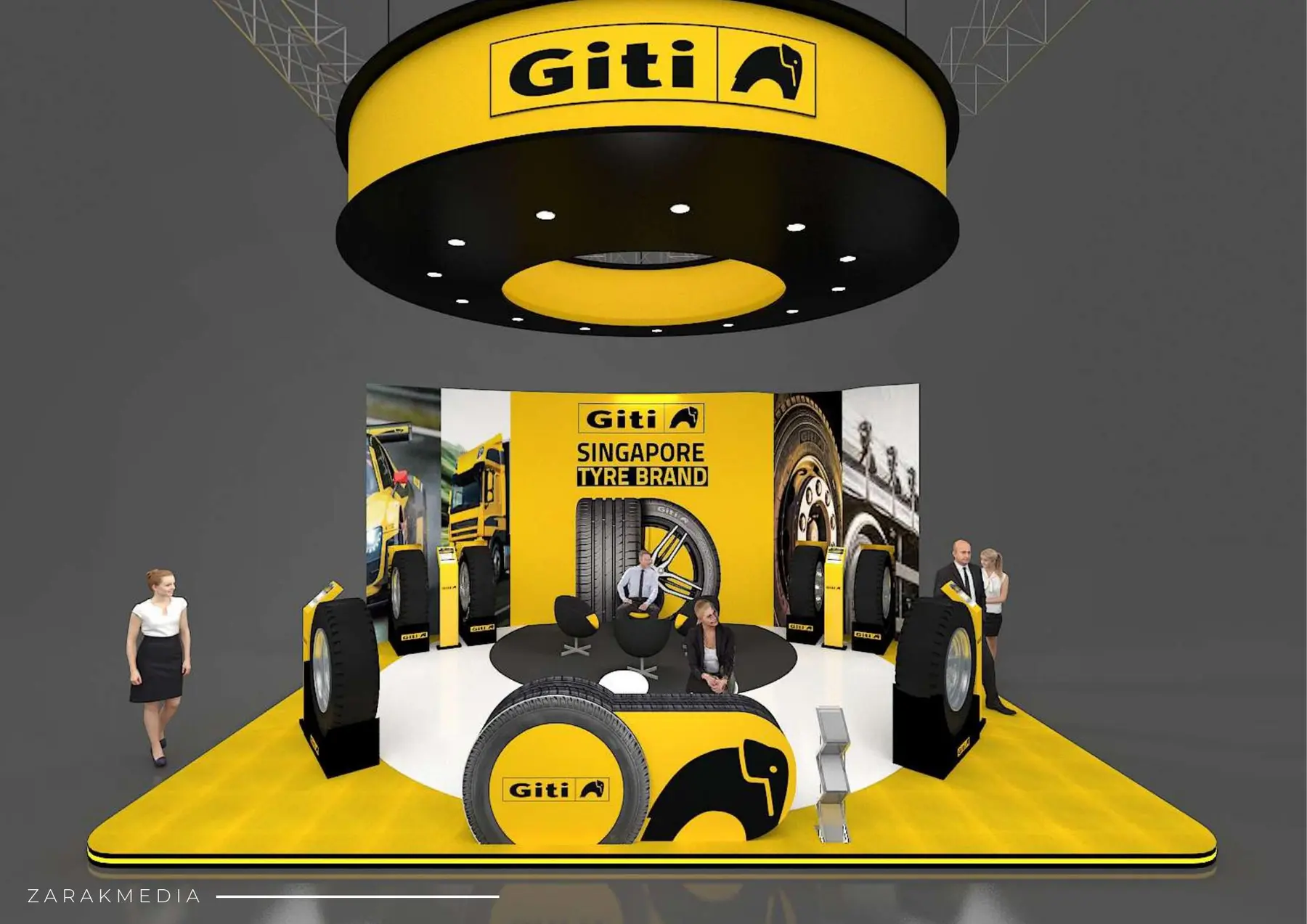
GITEX is the largest technology show in the region, and that scale is the whole challenge: your stand is one of hundreds, all bright, all busy. A stand that works at GITEX is built around live demos, carries one clear message readable from the aisle, and gives visitors a reason to stop and a place to talk. This guide covers how to design for that, and what the move to Expo City means for your build.
About the show
GITEX Global gathers enterprise technology, AI, cloud, cybersecurity, telecom and a large startup contingent, drawing a global trade audience to Dubai. The big change for exhibitors is the venue: the show has moved to the Dubai Exhibition Centre at Expo City Dubai, a departure from its long run at Dubai World Trade Centre, confirmed by the Dubai Media Office. New venue means new halls, access routes and build deadlines, so treat anything you remember from DWTC as out of date and check the current edition with the organiser. Dates move year to year; confirm them before you commit.

What a winning GITEX stand needs
Across tech shows, the stands that perform share the same priorities, and GITEX sharpens all of them because the competition is so dense. The hall is loud, bright and fast-moving, and visitors arrive with a packed agenda, so every element of the stand has to earn the few seconds of attention it gets as someone walks past.
- Live, staffed demos. Visitors come to see technology work. A demo station with a person who can run it beats any amount of static display. Plan how many you need running at once.
- One message, read from the aisle. People walk fast and scan. If they cannot tell what you do in three seconds, the demo never happens.
- Meeting space. GITEX is where deals start. A quiet table, or a private room on an upper deck, lets the real conversations happen away from the noise.
- Screens with a job. An LED wall that shows the product doing something earns its cost; one playing a loop to nobody does not.
- Power and connectivity. Tech stands are power-hungry and depend on reliable connectivity, both usually ordered through the venue. Get this right early.
Stand sizes and options
| Exhibitor | Typical choice | Why |
|---|---|---|
| Startup | Pavilion spot or small stand | Low cost, shared footfall, focus on one demo |
| Scale-up | Mid-size space-only, custom or modular | Room for two or three demos and a meeting point |
| Enterprise | Large space-only, often double-decker | Demos below, meetings and hospitality above |
Size to your plan, not your ego. A smaller stand running three busy demos beats a large one that looks half-used. If you need private meeting space and floor space is tight and costly, a second storey is worth considering; our guide to custom, modular and double-decker stands covers that trade-off.
Startups and pavilions: a smart first GITEX
If this is your first GITEX, you do not need a large custom stand to make it count. Many early-stage companies exhibit from a country, accelerator or sector pavilion, where the organiser provides the shell and the footfall is shared. That keeps cost and risk low and lets you focus everything on one thing: a single, sharp demo and a clear line about what you do. The brands that waste a first GITEX are usually the ones that overspend on structure and underinvest in the demo and the follow-up. Start small, learn how the show behaves, and scale your stand in later years once you know which conversations actually convert.
Technology on the stand, used well
GITEX is a technology show, so the temptation is to fill the stand with screens. Resist it. Every screen should have a job: a live product demo, an interactive tool a visitor can try, or a clear visual of something they cannot see in person, such as data, a dashboard or a device in action. A large LED wall earns its place when it shows your product doing something impressive and a person is there to talk it through. A wall of looping video playing to an empty aisle is expensive wallpaper. Decide, for each screen, what a visitor should understand or do after seeing it, and if you cannot answer that, the budget is better spent on lighting, a demo station or staff.
A build timeline for GITEX
GITEX falls in a peak period, so crews, materials and venue slots get booked early. Work backwards from the show.
| When | What happens |
|---|---|
| Space booked | Set budget, brief the stand team, book the crew early |
| 8–10 weeks out | Concept and 3D design signed off; demo plan agreed |
| 6–8 weeks out | Fabrication; Expo City documents and power ordered |
| 2–3 weeks out | Graphics, screens and demo content finalised |
| Build days | Install and test demos before doors open |
Staffing wins GITEX
The best-built GITEX stand underperforms with the wrong people on it, and a modest stand can outperform a lavish one with the right team. Demos need people who can run them confidently and read when a visitor is a genuine prospect versus a passer-by collecting swag. Brief the team before the show on the one message, the one action you want from a visitor, and who handles a serious enquiry. Roster enough people that nobody is stuck in a long conversation while others walk past unattended, and give the team breaks so energy holds across long show days. At a show this busy, the human welcome and a quick, confident demo do more than any single design feature, because they are what turns a glance into a conversation and a conversation into a lead.
Standing out, and capturing the result
The two things exhibitors most often get wrong at GITEX are blending in and not capturing leads. Blending in comes from too many messages and no single hook; fix it with one bold idea and a live demo. Losing leads comes from treating the stand as the whole job; fix it by deciding before the show how you will record every conversation and who follows up. A great stand with no capture plan is an expensive way to be forgotten by Friday.
Three mistakes come up again and again at GITEX, and all are avoidable:
- Too many messages. A stand that tries to say everything says nothing in a hall moving this fast. Pick one hook.
- Screens without staff. Technology left running alone is ignored; a person running a demo is what stops people.
- No follow-up plan. Conversations you do not record are conversations you lose. Decide capture and follow-up before you arrive.
When you are ready to plan, these help: what an exhibition stand costs in Dubai, how to choose a contractor, and our exhibition stand design and build service. For the wider calendar, see upcoming exhibitions in Dubai 2027.
No comments yet.