
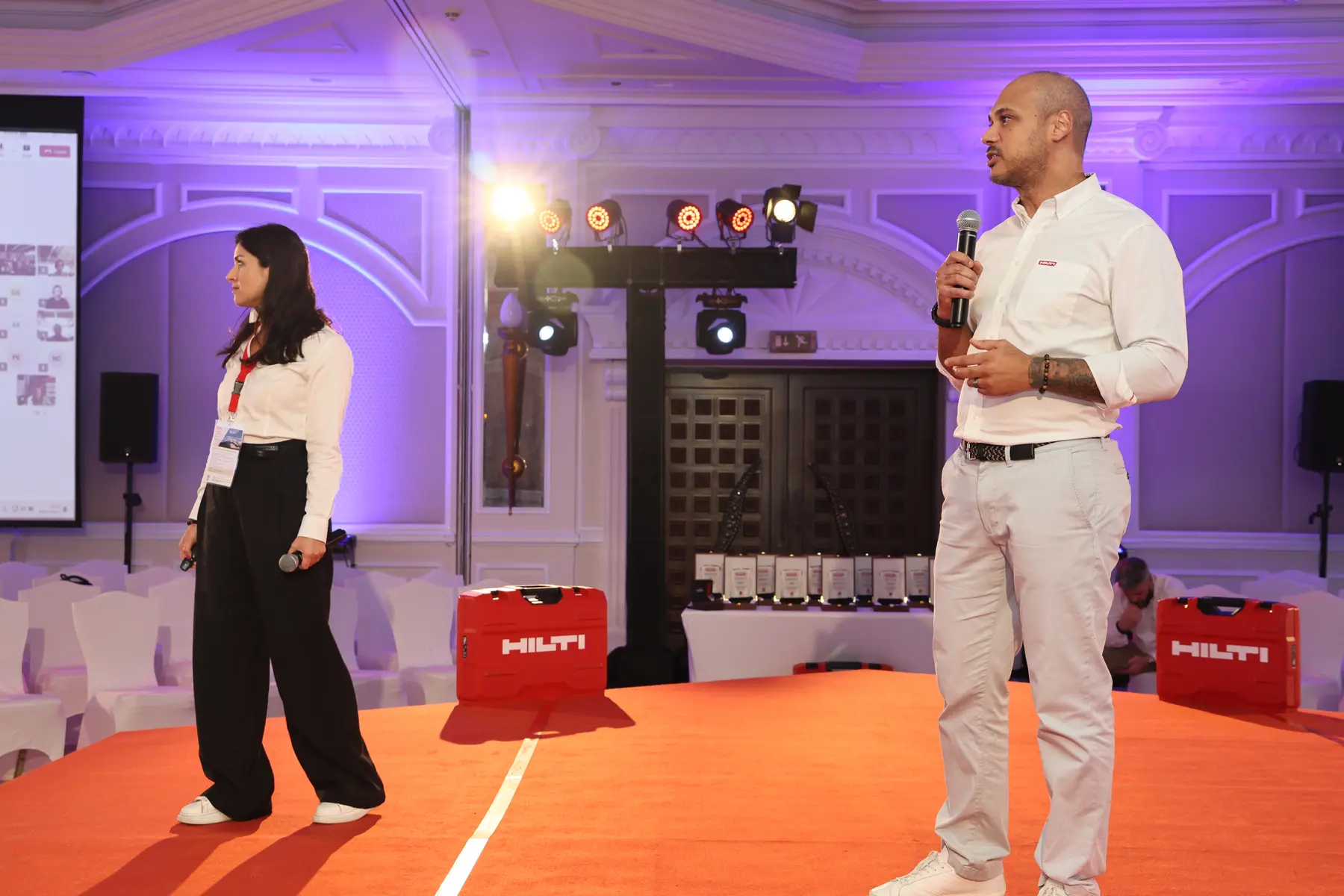
Almost every corporate event needs a screen. It shows the slides, the films, the awards and often the speaker's face. The first technical choice is how to make that picture: with an LED screen or with a projector.
This guide compares the two in plain terms. It explains how each one works, where each one is the better choice, and what to ask your production team.
How each one works
An LED screen is a wall built from panels. Each panel holds thousands of small lights that make the picture themselves. Because the screen is its own light source, it stays bright in a lit room.
A projector throws light onto a white or grey screen. The picture you see is reflected light. Any other light that falls on the screen, from windows or stage lights, washes the picture out.
LED and projection compared
| Factor | LED screen | Projection |
|---|---|---|
| Bright room or daylight | Works well | Picture washes out |
| Dark room | Works well, may need dimming | Works well |
| Size and shape | Any size, wide formats and shapes | Limited by screen size and throw distance |
| Stage lighting | Not affected | Light spill reduces contrast |
| Presenter shadow | None | Possible with front projection |
| Closest viewing distance | Depends on pixel pitch | Comfortable at close range |
| Set-up time and crew | More | Less |
| Weight and rigging | Heavy, needs a structure or rigging | Light |
| Cost | Higher | Lower |
| Cameras and live stream | Needs testing to avoid visual artefacts | Usually simple |
When LED is the right choice
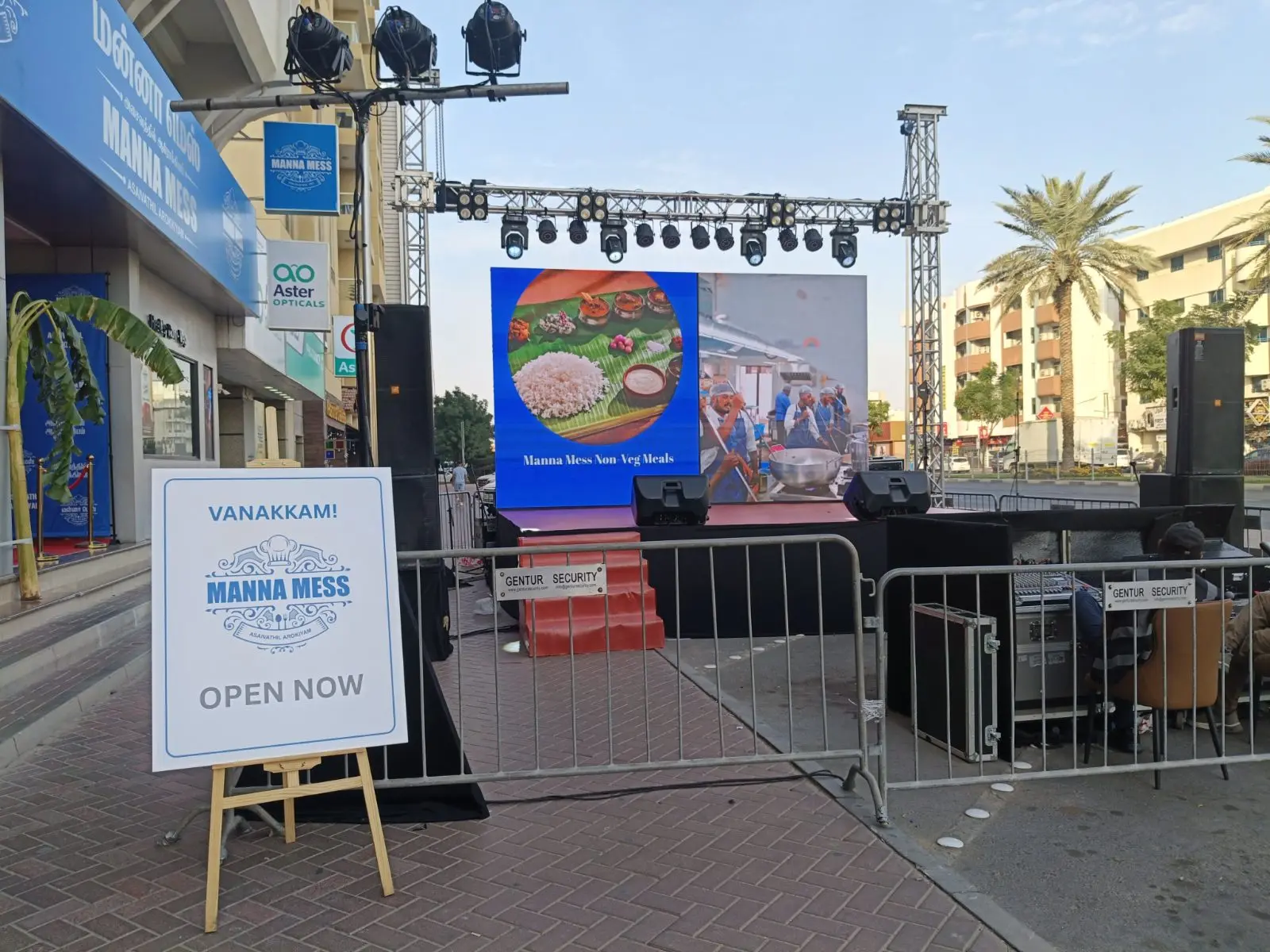
- Outdoor events in daylight or early evening.
- Rooms with windows or lighting you cannot control.
- Large audiences where the screen must be wide and tall.
- Stage designs that use the screen as the set, with wide or shaped surfaces.
- Shows with strong stage lighting, such as awards and launches.
When projection is the right choice
- A dark room where you control the light.
- Smaller meetings and training sessions.
- Venues with built-in screens and projectors that suit the content.
- Short set-up windows where a wall cannot be built in time.
- Projection mapping, where the picture is thrown onto a building or a set piece.

Pixel pitch and the closest seat
An LED screen is made of dots. Pixel pitch is the distance between them, in millimetres. If the audience sits close and the pitch is coarse, people see the dots instead of the picture. A finer pitch looks sharp at close range but costs more.
Tell your production team where the closest seat will be. They will recommend a pitch that suits that distance and your content. Small text on slides needs a finer screen than a film does.
Throw distance and the projector
A projector needs distance to make a large picture. That distance is the throw. In a low or short room, the projector may not fit where it needs to be, or people may walk through the beam. Rear projection solves the shadow problem but needs clear space behind the screen.
Content is made for the screen
A standard slide fits a standard projector screen. A wide LED wall has a different shape, so slides and films must be designed for it. Ask for the exact pixel size of the screen as soon as it is decided, and share a template with every speaker. Our guide to corporate event stage design explains how the screen fits the wider stage.
Questions to ask your production team
- How bright will the room be during the show?
- Where is the closest seat and the furthest seat?
- What screen size and shape suits the stage design?
- What pixel pitch do you recommend, and why?
- Can the venue floor or ceiling take the weight?
- How long does the build take, and when can we get into the room?
- What is the screen resolution for our slides and films?
- If we are filming or streaming, has the screen been tested on camera?
Our conference stage and AV checklist covers the rest of the technical set-up, and the venue questions that decide your event budget covers access times and rigging.
How Zarak Events can help
We produce corporate events in Dubai with in-house staging, sound, lighting and LED. For the events we manage, we choose the screen with the stage design, the room and the content, then build, test and operate it. We do not offer standalone equipment rental. Our event production page explains the service.
See corporate event management, and read how we work from concept to final cue. If you are planning an event with a stage and screen, send us an enquiry with your date, expected numbers and preferred area.
No comments yet.