

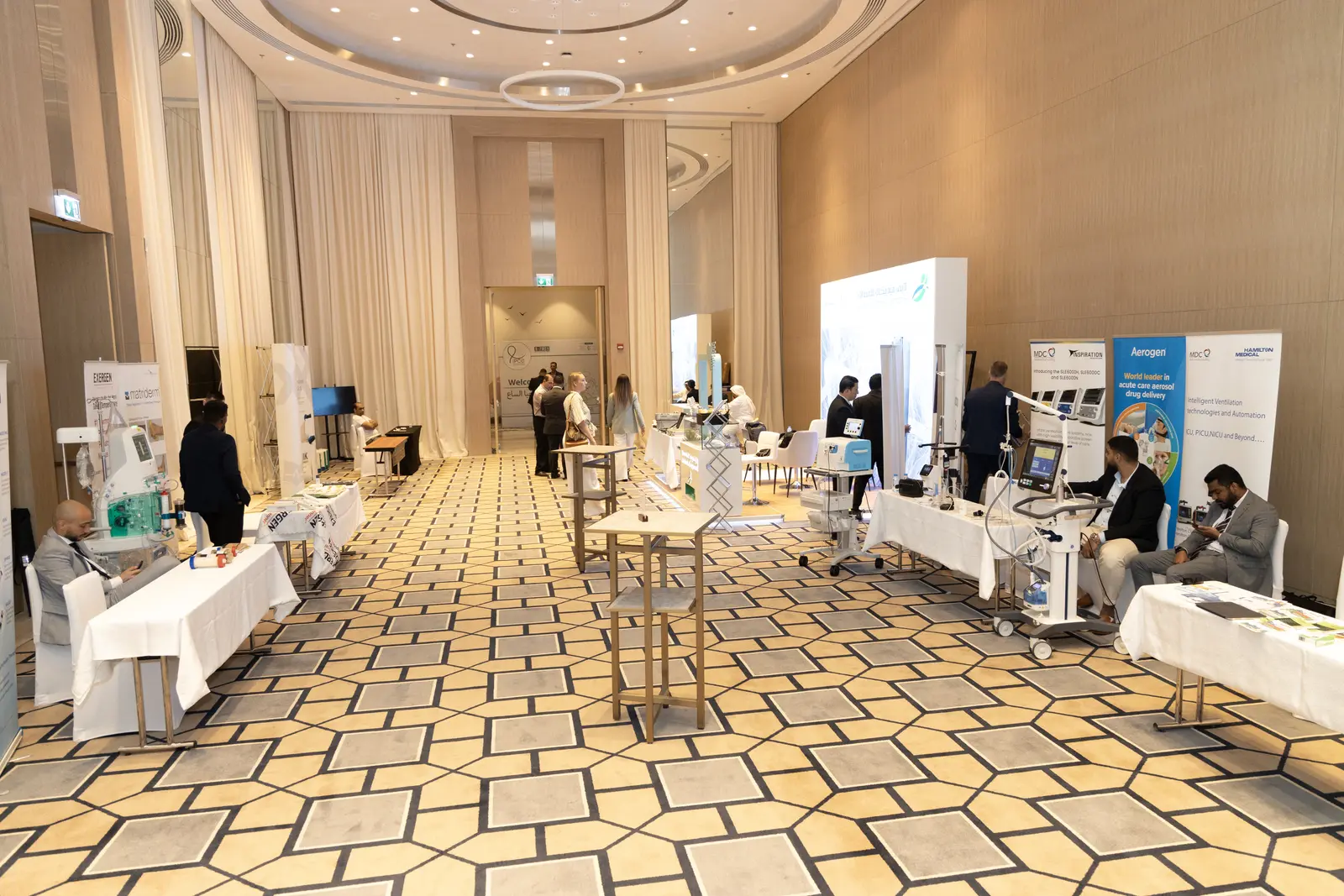
The venue is chosen for its location, its look and its price per head. Then production is priced against it, and the number surprises everybody. The venue did not get more expensive — it simply turned out to have constraints nobody asked about.
These are the questions worth asking before you sign, not after.
Power: how much, and from where
Lighting, LED, sound and catering all draw power. What matters is not only how much the venue has, but where the outlets are and whether you can reach them. A ballroom with plenty of power at the back of house and nothing near the stage means cable runs, matting and labour.
Ask what is available, where it terminates, and whether there is a cost to use it. Outdoors, assume you are bringing a generator until somebody proves otherwise — and remember a generator needs a position, fuel and a sound-safe distance from the audience.
Ceiling height, and what you are allowed to hang from it
Height decides how big a screen can be and how high it can sit. If the audience at the back cannot see over the heads in front, the screen is too low — and a low ceiling means the only fix is a wider, shorter screen or a raised stage that eats the same headroom.
Separately: can you rig from the ceiling at all? Many venues do not permit it, or permit it only through their own approved rigger. Ground support towers are the alternative, and they take floor space you were planning to seat people in.

Load-in: the door, the route and the lift
Everything you build has to get in through the smallest opening on its route. A goods lift with a low ceiling can rule out a whole staging system. A loading bay two floors below with a long push adds crew hours to every load.
Ask for the dimensions of the loading door and the lift, and walk the route from the truck to the room. The distance matters as much as the doorways.
When you can get in, and when you must be out
A build that could be done in a day becomes an overnight if the room is only free from 10pm. Access windows drive crew costs more reliably than equipment does. Ask what is in the room before you and after you, and whether you are paying for the day before.
Floor: loading, protection and what you may fix to it
Heavy structures need a floor that can take them. Carpet, marble and grass each need different protection, and some venues charge for damage to surfaces you never touched if it is not documented beforehand. Ask whether you may fix anything to the floor, and photograph the room on arrival.
House AV: what is included, and what you may replace
Some venues include a house system. Some require you to use it. Some allow external suppliers but charge a fee for the privilege. This single answer can move a budget significantly in either direction, so get it in writing before you compare venues on price per head.
Noise limits and curfews
Outdoor and mixed-use venues often have a sound limit and a time after which amplified audio must stop. If your event peaks with a band at 11pm, this is the question that decides whether the event works at all. Ask for the limit as a number and the curfew as a time, not as reassurance.
What the venue already owns
Tables, chairs, linen, staging blocks, lecterns, screens. Anything you can use is something you are not renting. Anything that exists but is ugly is something you may have to cover. Ask for an inventory and, where it matters, ask to see it rather than trusting the description.
Storage, crew space and parking
Empty cases have to go somewhere. Crew need somewhere to be that is not the event. Trucks need somewhere to sit. These are unglamorous questions that quietly add cost when the answer is no.
Who is responsible for approvals
Depending on the venue and the nature of the event, there may be approvals to obtain, and venues differ in how much they handle. Establish early who is responsible for what, and confirm current requirements and timings with the venue and the relevant authority rather than assuming last year's answer still holds.
Take this list to the site visit
A site visit spent admiring the room is a wasted site visit. Bring the list, take photographs of the load-in route and the power positions, and get the answers in writing. The venue that answers these questions well is usually the venue that will be easy to work in.
We cover these questions as part of corporate event management, and they feed directly into what event production will cost you.
No comments yet.