
The question we hear most often before an outdoor launch or public activation in Dubai is not about staging or catering. It is whether the event needs a permit, who issues it and how long it takes. The answer depends mostly on where the event is, and getting it wrong is one of the few things that can stop an event on the day.
This guide explains which authority issues event permits in different parts of Dubai, what the Dubai Development Authority publishes about its fees, documents and timelines, what changes when you build temporary structures, and how to plan a permit timeline that does not put your date at risk. It reflects the official guidance at the time of writing. Requirements change, so always confirm with the issuing authority before you commit to a date.
Does your event need a permit?
The Department of Economy and Tourism describes its event permit service as covering entertainment, sport, charity and corporate events organised in Dubai. As a working rule, plan on needing approval if your event has any of the following:
- it is open to the public, ticketed or promoted;
- it includes performances, entertainment or appearances by well-known personalities;
- it takes place outdoors, or in a space not normally used for events;
- it involves temporary structures such as stages, truss, tents or seating stands;
- it uses outdoor signage, banners or flags.
A private meeting or dinner inside a hotel ballroom is a very different case from a public roadshow in a car park, and the venue is a good first source of guidance on what it already holds approvals for. Where the line falls for your event is set by the authority, not by the venue or the agency, so if there is any doubt, ask before you announce a date.
Which authority issues the permit?
Dubai is divided into jurisdictions, and the permit comes from the authority responsible for the land the event sits on.
| Where the event is | Who to approach | Notes |
|---|---|---|
| Most of Dubai, including mainland venues | Department of Economy and Tourism (DET) | Event permits for entertainment, sport, charity and corporate events |
| TECOM free-zone communities, such as Dubai Internet City, Dubai Media City and Dubai Studio City | Dubai Development Authority (DDA) | DDA states that its event permit is limited to TECOM free-zone areas |
| Dubai International Financial Centre | DIFC | DIFC operates its own Events NOC service |
| On the water: marinas, yachts and marine activities | Dubai's maritime authority | Marine activities and events have their own permit service |
Other free zones and private communities may run their own approval processes, and the venue or landlord will know which applies. Master-planned communities and private developments often also require a no-objection certificate (NOC) from the master developer, even where the permit itself comes from DET or DDA. That NOC usually has to be in hand before the permit application can be completed, which is why it belongs at the very start of the timeline.
What does an event permit cost in Dubai?
Fees depend on the authority and the type of event. The Dubai Development Authority publishes its fees for events in TECOM free-zone areas in full on its event permit page:
| Item | Fee | Applies to |
|---|---|---|
| Non-commercial event permit | AED 500 | Events without a marketable or commercial objective, such as National Day celebrations, government-sponsored events, events supporting special causes and volunteering activities |
| Commercial event permit | AED 5,000 | Events with a commercial objective |
| Structural fee | AED 1,000 | Added where temporary construction is involved |
| Knowledge Dirham and Innovation Dirham | AED 10 each | Charged per transaction |
On those figures, a commercial product launch with a temporary stage in a DDA area carries AED 6,020 in permit fees, and a non-commercial community event with no structures AED 520. DET sets its own fees for events elsewhere in Dubai, and they vary by event type, so confirm them on its event permit service before you budget.
These are authority fees only. The work of preparing layouts, structural packages, risk assessments and emergency plans, and of obtaining the NOCs, is separate, and is usually part of your agency's or contractor's scope. When you compare quotes, check whether that work is included.
What documents does an application need?
For an event permit in a DDA area, whether commercial or non-commercial, the authority lists:
- a detailed layout showing the location of all stages and other facilities;
- a NOC from the master developer;
- NOCs from the relevant authorities;
- the event agenda;
- the event organiser's trade licence;
- an emergency and evacuation plan.
DDA lists the requester for this service as the contractor, and the trade licence it asks for is the event organiser's. In practice, the application is usually made by the licensed company delivering the event, with the client supplying information about the programme, audience and any commercial element. A company whose trade licence does not cover event organising would not normally apply directly.
The layout and the emergency plan are the documents that most need care. A layout should show stages, seating, food areas, toilets, power, entrances and exits, and the emergency plan should show how people leave the site and how emergency services reach it. Both need to be drawn for the real site, not adapted from a previous event somewhere else.
Temporary structures: stages, truss, tents and seating
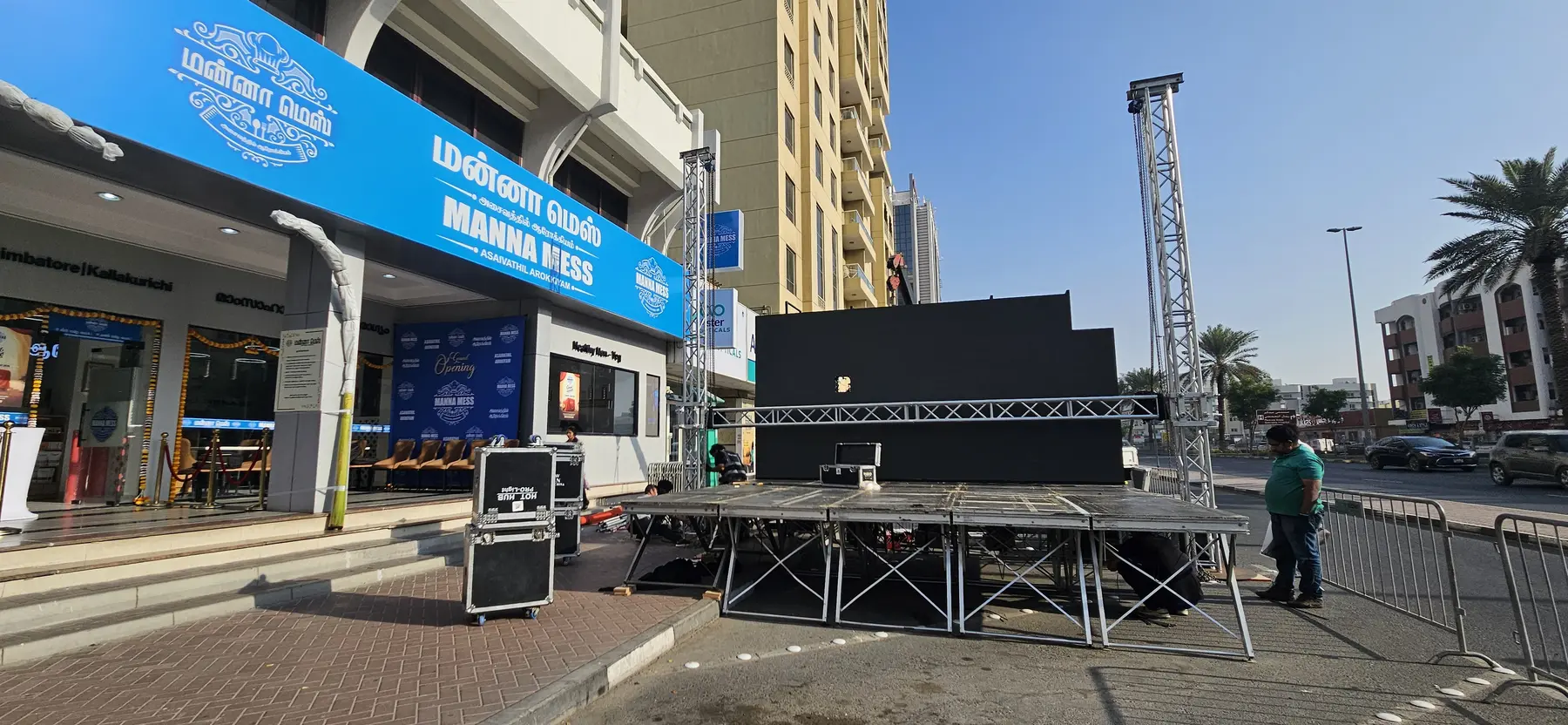
Once an event involves temporary construction, the application grows. For structural events, DDA additionally requires:
- structural drawings stamped by a specialised contractor, supplied as a soft copy in DWF format;
- structural calculations and a structural model;
- a risk assessment, an HSE plan and a risk compliance method statement covering every phase: mobilisation, operation and dismantling.
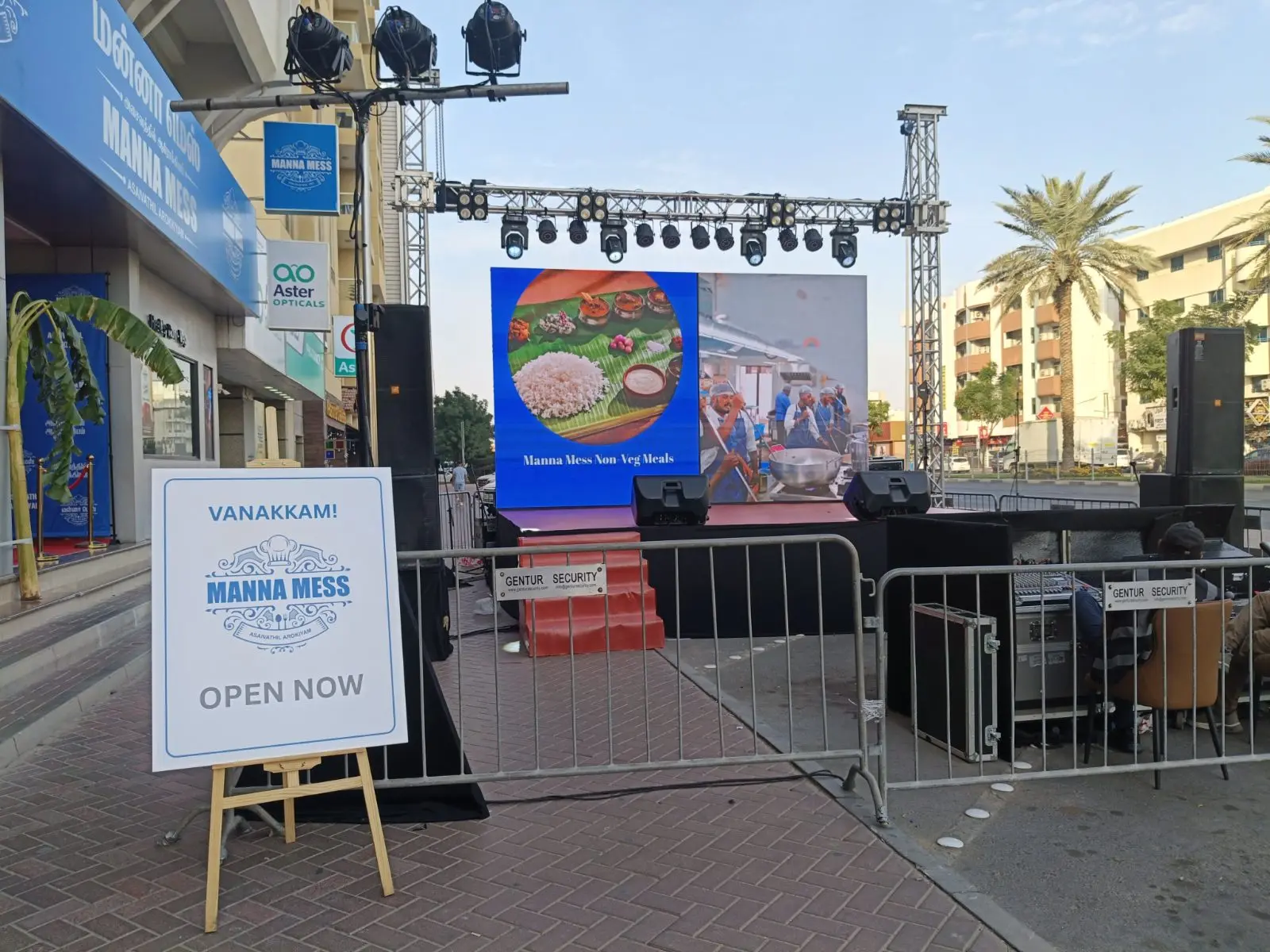
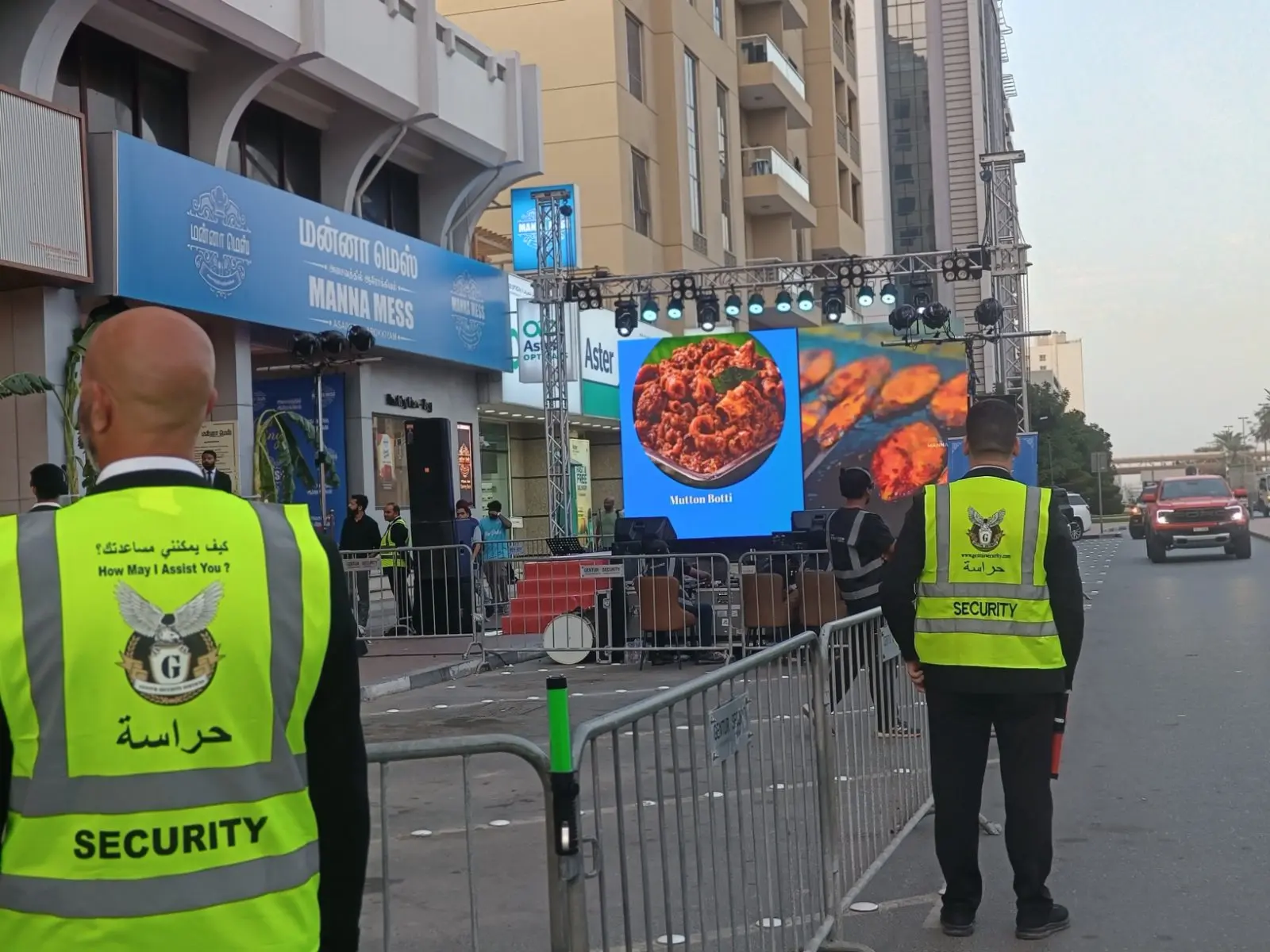
These documents come from the people building the structures, so they depend on the design being settled. A stage that grows by two metres a week before the event is a stage whose drawings and calculations have to be redone. That is the strongest argument for locking the production design early, and for having permits and production managed by the same team. On the Manna Mess restaurant launch, permits and operational management sat with the same team as the outdoor stage, LED and sound, which kept the authority coordination aligned with what was actually being built.
If you are commissioning a stage or structure, our event production page explains what a production team delivers, and how to brief an event production company covers the information they need from you to produce accurate drawings first time.
Signage, banners and flags
Outdoor advertising is permitted separately. DDA notes that an advertising permit application should be submitted when an event uses outdoor advertising, and gives directional signage, banners and flags as examples. This is easy to forget, because signage is often ordered late and treated as decoration rather than as part of the site. Add it to the permit plan at the same time as the structures, not the week before.
How long does it take to get an event permit?
DDA gives an estimated time to deliver of three working days for its event permit, and accepts applications online at any time or in person at its customer service centre in Dubai Studio City. Three working days is the time for the permit itself. It does not include the NOCs that must be attached to the application, the time needed to prepare structural drawings and calculations, or any resubmission if the authority asks for changes.
A realistic plan therefore works backwards from the event date with generous room for the steps before submission, especially around busy periods such as National Day, the winter events season and Ramadan, when many events are being planned at once.
An event permit timeline that protects your date
- Confirm the site and its jurisdiction. Establish who issues the permit, and whether a master developer or landlord NOC is needed.
- Lock the concept and layout. Stages, seating, food, power, entrances and exits, drawn for the real site.
- Request the NOCs. From the master developer and any other relevant authorities, as early as the layout allows.
- Prepare the structural package. Stamped drawings, calculations, risk assessment, HSE plan and method statement, if there are structures.
- Write the emergency and evacuation plan. Based on the final layout and the expected attendance.
- Submit the application and pay the fees. Online or at the authority's service centre.
- Apply for the advertising permit for any outdoor signage, banners or flags.
- Keep approvals on site. Copies of permits and NOCs should be available throughout build, show and dismantle.
Common reasons permits are delayed
- The master developer NOC is requested late, after everything else is ready.
- The layout is a generic plan rather than a drawing of the actual site.
- Structural drawings are not stamped, or do not match what is being built.
- The design changes after submission, and the package has to be redone.
- Signage and flags are forgotten until the build.
Who should handle the event permit?
For most corporate clients, the honest answer is the licensed company delivering the event. The documents an authority asks for, layouts, structural packages, risk assessments and emergency plans, are produced by the people designing and building the event, and the organiser's trade licence is part of the application. What the client owns is the information: the date, the audience, the programme and any commercial element, all of which affect which permit type applies.
When you brief an agency, ask directly who will apply, which authority they expect to deal with, and how much time they have allowed for NOCs. Clear answers to those three questions are a good sign that the rest of the plan is grounded too. Our corporate event management and brand activation work includes authority coordination as part of delivery. If you would like us to look at what your event will need, tell us about it. For budgeting the rest of the event, see what an event costs in Dubai.
No comments yet.