

A corporate iftar is one of the few events in the Dubai calendar where everyone already knows the start time: it begins when the sun goes down. That single fixed point shapes everything else, from when the invitations go out to where the dates sit on the table. This guide explains how to plan a corporate iftar or suhoor in Dubai for Ramadan 2027, what to decide first, and what tends to go wrong when planning starts late.
It is written for HR, marketing and leadership teams hosting clients, partners or staff. Whether you run the evening in house or bring in a corporate event management team, the sections below are the list of things someone will have to own.
When is Ramadan 2027, and when should you start planning?
Ramadan follows the Islamic lunar calendar, which is about eleven days shorter than the Gregorian year, so the month moves earlier every year. According to current astronomical calculations reported by The National, Ramadan 2027 is projected to begin on 8 February 2027 and to last either 29 or 30 days. The exact date is confirmed only when the crescent moon is sighted, so treat early February as the planning window rather than a fixed date.
That places most corporate iftars and suhoors in February and early March 2027. Hotel ballrooms, restaurants and Ramadan tents are booked well ahead for those weeks, and the evenings that suit most diaries go first. A workable timeline looks like this:
- November: agree the purpose, the size of the guest list and the budget, and shortlist venues.
- December: confirm the venue and date, and brief production, catering and any entertainment.
- Early January: send save-the-dates, settle the running order and start any approvals needed for outdoor structures or signage.
- Two to three weeks before: send formal invitations with the exact sunset time for the date, an arrival window and a short dress note.
Leaving the venue decision until January is the most common reason a corporate iftar ends up on an evening nobody wanted, in a room shared with three other companies.
Iftar or suhoor: which format fits your event?
The two formats feel very different, and choosing the right one does more for the evening than any amount of decor.
| Corporate iftar | Corporate suhoor | |
|---|---|---|
| Starts | At sunset, fixed by the call to prayer | Later in the evening, at a time you choose |
| Mood | Structured, warm, often formal | Relaxed, social and unhurried |
| Typical format | Seated dinner or served buffet | Lounge seating, live stations, majlis areas |
| Best for | Client appreciation, leadership messages, partner dinners | Staff gatherings, community and networking evenings |
| Programme | Short, after the main meal | Light, spread through the night |
An iftar has a natural ceremony to it. Guests arrive having fasted all day, the fast is broken together, and there is a shared sense of occasion that suits a message from leadership or a moment of recognition for clients. The constraint is time: arrival has to happen before sunset, and nobody wants a speech before they have eaten.
A suhoor is looser. It usually starts after the evening prayers and can run late, which suits guests who break the fast at home with family and formats where people move around and talk. Our work includes a Suhoor Night for Iman Developers, an evening built around hospitality and conversation rather than a stage programme.

How do Ramadan working hours change your timings?
Each year the Ministry of Human Resources and Emiratisation announces reduced working hours for the private sector during Ramadan. For Ramadan 2026 that was a reduction of two hours a day, as it has been in previous years. Many offices therefore finish earlier in the afternoon, and companies often adjust shift patterns further.
For an iftar this has two consequences. Guests are not coming straight from a late meeting, so an early arrival time is realistic. But a large part of the city is on the road at the same time, heading to break the fast, so the hour before sunset is a poor time to ask people to cross Dubai. Choose a venue close to where most guests work, give an arrival window that ends 20 to 30 minutes before sunset, and put the sunset time for your exact date in the invitation.
Sunset in Dubai falls a little after 6 pm through February and into March, and moves a few minutes later each week. Check the precise time for your date when you finalise the running order, because the whole evening hangs from it.
Choosing a venue: hotel, Ramadan tent or your own space
Most corporate iftars in Dubai take place in one of three settings, and each brings a different kind of work.
Hotel ballrooms and restaurants come with catering, service staff and furniture, and usually a prayer room nearby. They are the simplest option and the most in demand. Ask early about minimum spends, whether other groups share the space on your night, and whether you can bring in your own production for lighting, sound and branding.
Ramadan tents run by hotels give the evening a sense of occasion with the atmosphere already built. They can be shared spaces, so if the evening has a programme, ask about a private section or a full buyout.
Your own premises or an outdoor site give the most control and the strongest brand presence, but you are building the venue: seating, lighting, power, shade or cover, catering logistics, toilets, parking and, where there are temporary structures, the approvals that come with them. Our guide to event permits in Dubai sets out what that involves, and the venue questions that decide your event budget apply to a Ramadan evening as much as to any other event.
Whatever the setting, check three things that matter specifically during Ramadan: that there is a clean, quiet space for prayer with access to washing facilities; that the venue can serve the first course the moment the fast ends; and what its policy is on music and entertainment during the month.
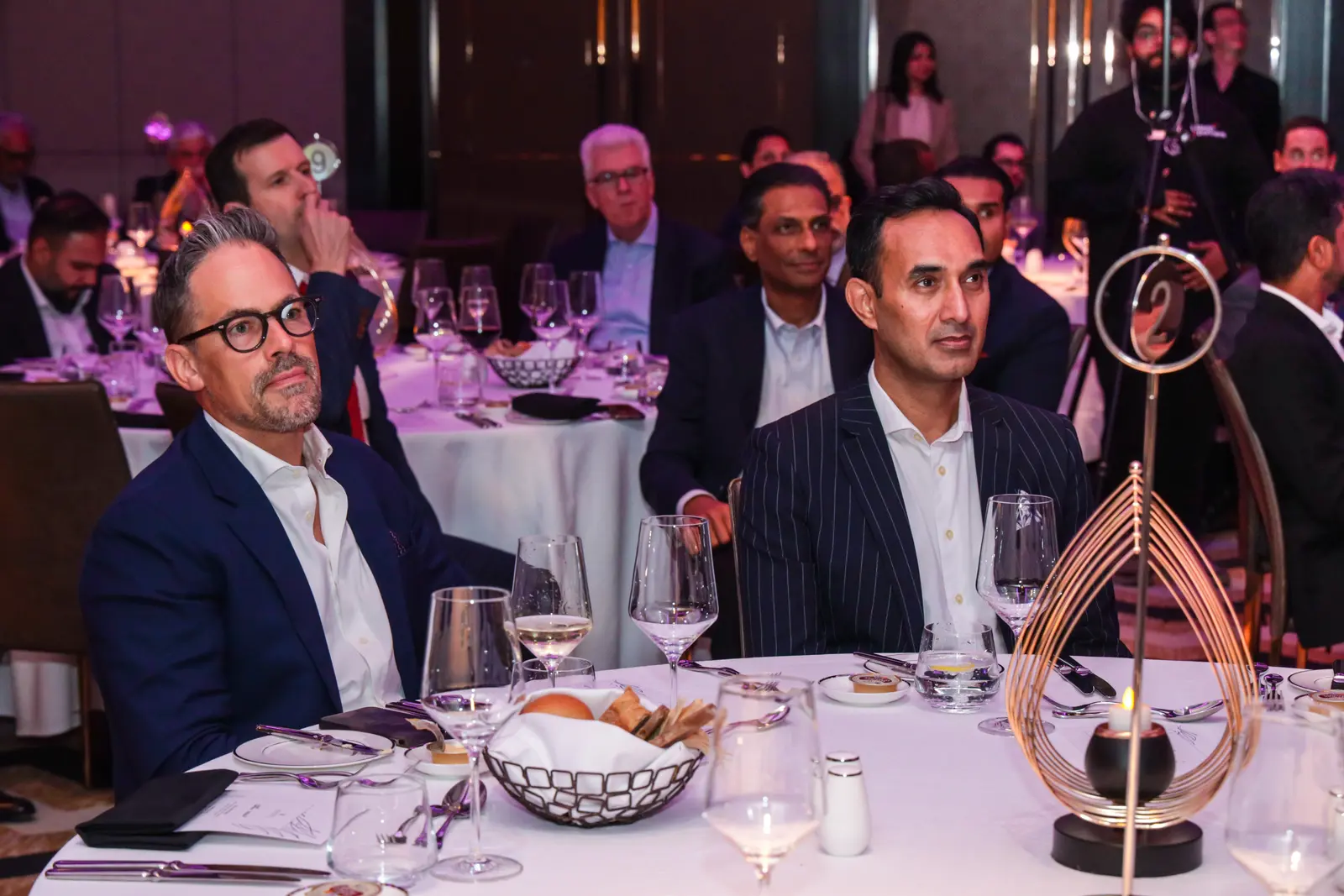
The order of the evening
The running order of a corporate iftar is shaped around the fast. Getting it right is what makes guests feel looked after.
- Arrival, before sunset. Guests are welcomed and seated. Water, dates and perhaps laban or juice are already on the tables, but nobody eats yet.
- Sunset. When the call to prayer marks the end of the fast, guests break it with dates and water. Soup and light starters follow.
- Prayer. Many guests will step away to pray. Allow 15 to 20 minutes, and schedule nothing on stage in that time.
- The main meal. Buffet or served, paced so that guests returning from prayer are not left behind.
- Programme. A welcome from leadership, a recognition moment or a short film belongs here, after the meal, while dessert, Arabic coffee and tea are served.
- Close. Many guests have later commitments, including night prayers, so a clear and gracious end time is a courtesy rather than a formality.
Keep speeches short. A five-minute welcome lands better than a long presentation, and the evening will be remembered for the hospitality rather than the slides.
Food and catering
Iftar menus are generous by tradition, and guests expect variety: dates, soup, salads and mezze, hot dishes, a carving or live station, and desserts with Arabic coffee and tea. Ask the caterer how they manage timing, because food held under heat lamps while guests pray is food that disappoints.
Two practical points are easy to miss. Collect dietary requirements in advance, including vegetarian guests and allergies, because a buffet built around meat and seafood can leave some guests with very little. And decide before the night what happens to surplus food. Ask the venue or caterer whether they work with an approved food donation programme. Generosity is the spirit of the month, and a full buffet going to waste sits badly with it.
If you are budgeting catering separately from production, our article on what an event costs in Dubai shows how venue and catering allowances change a planning range, and the calculator on our homepage will give you a range for your own numbers.
Entertainment, lighting and tone
The right tone for a corporate iftar is warm and calm. Traditional live music such as oud or qanun, a calligrapher writing guests' names, or a storyteller suits the month far better than a DJ or a loud stage show. Venues set their own policies on music during Ramadan, so confirm what is permitted before you book anything.
Lighting should be warm and low enough to feel intimate, but bright enough for photography and for guests to see their food. Sound has to carry a short speech clearly without filling the room the rest of the time, and background music should sit underneath conversation rather than compete with it. These are production decisions, and an event production team will plan them around the running order rather than around a stage.
If you are filming or photographing the evening, brief the crew not to photograph guests while they pray or eat, and to focus on arrivals, the room, conversation and the programme. The content from a well-shot iftar is often used for months afterwards, so it is worth getting right.
Guests who are not fasting, and simple etiquette
Corporate iftars in Dubai bring together people of many faiths, and guests who are not Muslim are welcome. A short note in the invitation helps everyone feel comfortable: the arrival time, a gentle reminder about modest dress, and that guests are welcome to join in breaking the fast at sunset. Do not serve alcohol at a corporate iftar or suhoor, and avoid anything that has guests eating or drinking in view of others before sunset.
Remember your own team as well. Staff and crew working the event may be fasting, so plan their breaks and make sure they can break their fast on time rather than at the end of service.
Adding purpose: community and CSR during Ramadan
Many companies use Ramadan to give something back as well as to host. That can be as simple as packing iftar meals with a registered charity, or a larger community programme alongside the corporate evening. Our portfolio includes Ramadan community programmes for Ellington, where the event was built around the community rather than a stage. If you take this route, decide early how it will be organised and communicated, so that it reads as genuine rather than promotional.
Corporate iftar planning checklist
- Purpose and audience agreed: clients, partners, staff or community.
- Format chosen: iftar or suhoor.
- Budget set, including whether venue and catering sit inside it.
- Venue confirmed, with prayer space, first-course timing and music policy checked.
- Approvals in hand for any outdoor structures, signage or public-facing element.
- Running order built around sunset, prayer, the meal and a short programme.
- Dietary requirements collected, and a plan agreed for surplus food.
- Invitations sent with the exact sunset time, an arrival window and a dress note.
- Production briefed: warm lighting, clear speech sound, respectful photography.
- Team plan in place, including breaks for staff who are fasting.
How Zarak Events can help
We plan and produce corporate events across the UAE, from the venue and running order to staging, lighting, sound, entertainment and content capture, with one team accountable for the evening. If you are planning an iftar or suhoor for Ramadan 2027, tell us what you have in mind and we will come back with a format and a plan. You can see related work in our portfolio, and if your brief is still forming, how to brief an event production company is a good place to start.
No comments yet.