
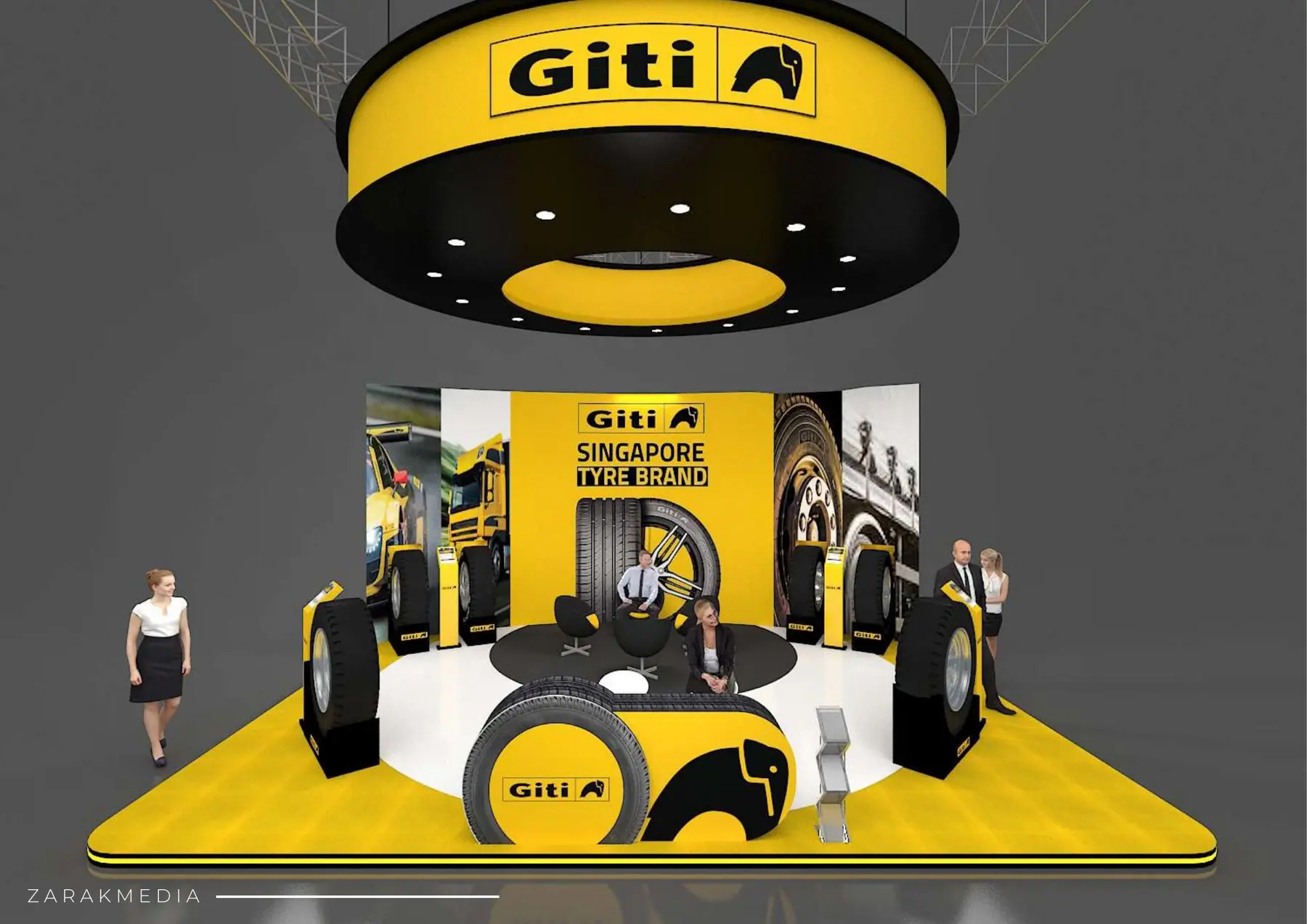
Exhibition stand design goes wrong in a predictable way. A design is commissioned, it looks good, and then it meets the organiser's regulations, the stand's actual footprint, and the fact that nobody agreed what the stand is for. Each revision costs time you do not have before a show.
Make these decisions first and the design process gets much shorter.
1. What the stand is for
Lead capture, product demonstration, meetings, or presence. These produce different stands. A lead-capture stand wants open edges and a short path to a conversation. A meeting stand wants enclosed, quieter space. A demonstration stand is built around the thing being demonstrated and the crowd that gathers to watch it.
Pick the primary purpose. A stand that tries to do all four does none of them well.
2. Your space and its type
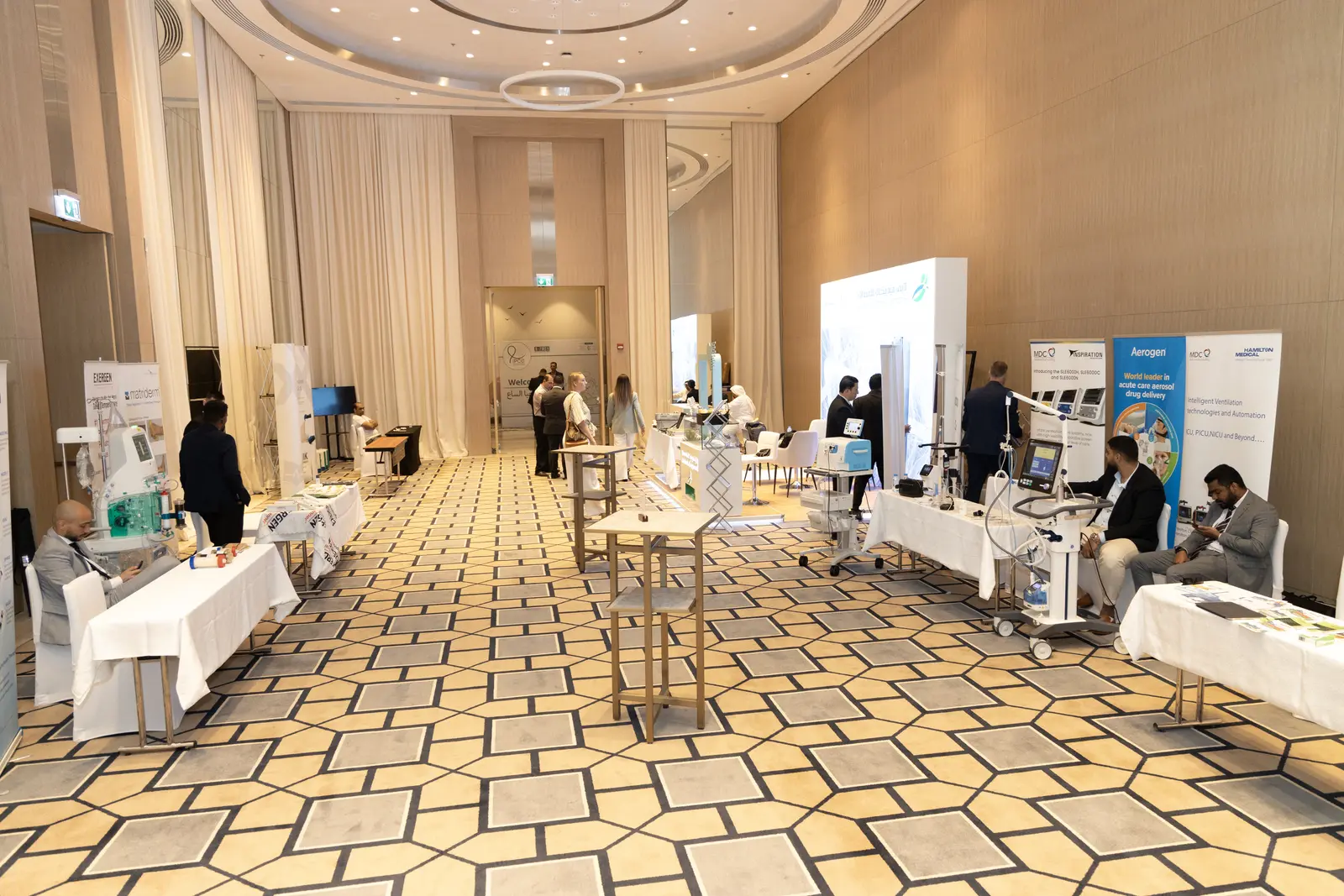
A row stand with one open side, a corner with two, a peninsula with three, an island with four — each has a different design logic. Storage and services get pushed to closed edges. Branding has to read from whichever direction people approach. Get the stand number, the dimensions and the type from the organiser before anyone draws anything.
3. The organiser's rules
Height limits, rules on hanging banners, whether a platform is permitted, rules about building to the boundary, requirements for structural drawings and approval deadlines. These are not suggestions and they are not the same at every show. The organiser manual answers most of them, and it is worth reading before the design brief, not after the first concept.
4. What actually happens on the stand
How many staff, at once. Whether people sit or stand. Whether you are serving anything. Whether there is a screen, a product, a demonstration or a draw. Count the bodies and the furniture and you will know whether the space works long before it is rendered.
5. Storage
Coats, bags, literature, samples, empty boxes, the kettle nobody admits to. Every stand needs a cupboard and most designs add it late, which means taking space from somewhere that was already allocated. Decide the storage volume early and design around it.
6. Power and connectivity
Screens, lighting, demonstration equipment and device charging all need power, and organisers usually sell it in fixed increments ordered by a deadline. Late orders cost more. If you need reliable internet for a live demonstration, treat the hall wifi as a fallback rather than the plan.
7. Graphics: what exists, and at what resolution
Large-format graphics expose weak artwork. A logo that looks fine on a slide can be unusable at two metres. Establish early what print-ready assets exist, who owns them, and who is adapting them for the stand. Build an artwork deadline into the schedule, well before the print deadline.
8. Reuse, or one-off
If you exhibit several times a year, a modular system that adapts to different footprints usually costs less over a season than a bespoke build each time — but it constrains the design, and it needs storage between shows. If this is a flagship one-off, bespoke is easier to justify. Decide which you are doing before you fall in love with a concept that only works once.
9. Who staffs it, and what they are told
The best stand in the hall underperforms if the people on it are unbriefed. Decide who is on it, in what shifts, what they ask visitors, and where the lead goes afterwards. This is a design input too: it determines how many seats, how many stations, and whether you need a place to have a private conversation.
10. The deadline chain, backwards
Work back from the show: dismantling, show days, build days, delivery, production and fabrication, approved drawings, organiser deadlines, artwork sign-off, design approval. Every link has a lead time. The date that matters is rarely the show date — it is the approval date several weeks before it, and it arrives sooner than anyone expects.
Decisions first, design second
None of this is about being conservative. It is about spending the creative effort once, on a concept that can actually be built in the space the organiser sold you, in the time available. Designers do better work with constraints than without them.
Our exhibition stand design and build page explains how we take a stand from concept through fabrication and installation, and there are completed builds and concepts in our work.
No comments yet.