
Search for event management companies in Dubai and you will find hundreds of them, along with many "top 10" lists that are only a starting point. The right company for a large multi-day conference may be the wrong choice for a small leadership dinner. Equally, an agency that runs a brilliant mall activation may never have produced a keynote stage. Choosing well is not about finding the best agency in Dubai but the one that fits your event, your budget and the level of risk you are willing to carry.
This guide is for the person making the choice. It covers what to decide before you contact anyone, what to check, how to compare proposals fairly, and what should make you walk away. We are an event agency ourselves, so we have kept to the questions we would want a client to ask us.
Start with what you actually need
"Event management company" covers several different types of business. Before you make a shortlist, decide which of these your event is mainly about, because that decides who you should be talking to.
- Event management. This means planning and running the whole event: objectives, venue, suppliers, guest journey, programme, permits, budget and the live day. It is the core of corporate event management and, for programmes with speakers and delegates, of conference event management.
- Event production. This is the technical system: stage, sound, lighting, LED screens, rigging (hanging equipment safely from the ceiling), playback and show control. If the event already has a planner and needs a reliable technical partner, you need an event production company.
- Brand activation. These are public-facing experiences designed to make people take part: pop-ups, launches, sampling, interactive zones and community events. This is a marketing brief first, so a brand activation agency should be judged on its ideas and audience engagement, as well as on logistics.
- Exhibition stands. This is a design and build project with its own venue rules and deadlines, so if the stand is the main job, the checks are different. Read how to choose an exhibition stand contractor in Dubai, and see our exhibition stand design page for how we scope that work.
Most events mix two or more of these. The key is to know which part carries the most risk and choose a company that is strongest in that part.
Agency, production house or the venue's in-house team?
In Dubai, you will usually choose between three kinds of provider.
| Option | Usually strong at | Watch for | Often a good fit for |
|---|---|---|---|
| Full-service event agency | Concept, planning, managing suppliers, guest experience and running the day | Whether production is done in-house or subcontracted, and how much margin is added on top of suppliers | Events where both creative direction and operations matter, or where you want one accountable partner |
| Production house | Staging, sound, lighting, LED, rigging and technical show control | Limited involvement in creative, guest management or permits unless agreed | Clients with their own planner or in-house events team who need technical depth |
| Venue's in-house events team | Room set-up, food and beverage, house AV (audio-visual) and knowing their own building | House AV packages may not suit a complex show, and they are not responsible for anything outside the venue | Straightforward meetings and dinners held entirely within one hotel or venue |
These options are not mutually exclusive. Many events use the venue for food, beverage and rooms, and an agency for everything the audience sees and hears. If you do this, agree early on who leads on the day. Our guide to the venue questions that decide an event budget lists what to settle before you sign.
What to check before you shortlist
A confident pitch tells you very little. These checks tell you more, and a serious agency will be happy to answer them.
Trade licence and activity
Ask for the company's UAE trade licence and check that its licensed activities cover the work you are hiring it for. This is more than paperwork. When an event needs a permit, the organiser's trade licence is usually part of the application, so a company without the right licence may have to apply through someone else.
Insurance
Ask what insurance the company has, which at minimum is usually public liability, and check whether it meets your venue's requirements. Venues often ask for proof of insurance before load-in. If the agency uses subcontractors, ask whether they are covered too.
Who actually does the production
Some agencies own their staging, sound, lighting and screens, and employ the technicians who run them. Others design the event and hire everything in. Both models work, though they behave differently under pressure. Ask which items they own, which they hire, and who the subcontractors are for anything critical.
Permit experience
Not every event needs a permit, but some usually need approval from one or more authorities. These include outdoor events, temporary structures, public or ticketed events, and anything with commercial activity in a public place. Different parts of Dubai also come under different authorities. Ask which authority the agency expects to deal with for your event, who will apply, and how much time they have planned for it. Our guide to event permits in Dubai explains how the process works, so you can judge their answer.
Venue relationships
An agency that has worked in your venue before already knows its load-in routes, ceiling heights, power limits, rigging rules and the people who approve them. Ask where they have worked and, if your venue is not on the list, how they would do the site survey.
Who is in the room on the day
The people who pitch are not always the people who deliver. Ask who will be your day-to-day contact and who will call the show (give the cues during the live event). Ask too how many of the agency's own staff will be on site compared with freelancers. If you can, meet the delivery lead before you sign.
How to read a portfolio and case studies
Every agency shows its best work, so your job is to work out what that work actually proves.
- Real photography over renders. 3D visualisation is a useful design tool, but it shows design intent, not delivery. Look for photographs and film taken at the actual event, ideally with the audience in them.
- The agency's role. "Worked with" a well-known brand can mean anything, from running the whole event to supplying one screen. Ask what the agency was responsible for on each project that matters to you.
- Similar scale and format. A strong gala portfolio does not prove that an agency can run a multi-day conference with breakouts and a sponsor floor. Look for at least one project close to yours.
- Film. Event films show how a room really felt: the sound, the pacing and the transitions between moments.
- Specific results, with care. If a case study claims an outcome, ask how it was measured. A clear, modest claim is more credible than an impressive but vague one.
- References. Ask to speak to a recent client who had a similar event.
This is exactly why our own selected work is sorted by event type, with films next to the photography.
Brief three agencies in the same way
If each agency hears a different version of the event, you will get three proposals for three different events. Write one brief and send the same document to each company on your shortlist, covering:
- The objective: what the event must achieve, in one or two sentences.
- The audience: the number, their profile, and whether they will sit or stand.
- The date, the timings, and whether the venue is confirmed or still on a shortlist.
- A rough run of show (the order of the event), even if it lists only the main moments.
- What content already exists, and who is producing anything new.
- Known constraints: brand rules, VIP requirements and sponsor obligations.
- A budget range, and whether the venue and catering are included in it.
- How and when the decision will be made, and what you want back from them.
Our guide on how to brief an event production company explains why each of these items changes the final price on a quote.
Compare quotes line by line
Two quotes for the same event can be very different because they describe different events. Put them side by side under the same headings, and look for what is missing as well as what is priced.
| Line | What to check |
|---|---|
| Management and creative fee | What is included: concept rounds, planning meetings, site visits and on-site management |
| Venue and catering | Included in the quote or paid directly by you; this alone explains many gaps |
| Stage and set | Dimensions, materials, branding, and whether it is custom-built or from stock |
| Sound, lighting and screens | Equipment specified item by item, owned or hired, and whether technicians are included |
| Content and playback | Who produces the graphics, films and slides, and who operates playback |
| Staffing | Number of staff and their roles on site, hours, and whether rehearsal days are covered |
| Permits and approvals | Which are included, which are passed through at cost, and who applies |
| Logistics | Transport, build and dismantle time, overnight work and waste removal |
| Content capture | Photography, film, editing and delivery times |
| Exclusions and VAT | Listed explicitly, and whether prices include 5% UAE VAT |
A quote that looks low because it leaves out rehearsal time, venue charges or dismantling will not stay low. Ask each agency to price against your specification and to list exclusions in writing. If you want an idea of cost before you brief anyone, read our guide to what an event costs in Dubai. It shows the planning ranges our calculator uses and explains why conferences and exhibition stands get a custom review instead of an instant number.
Questions to ask in the pitch meeting
- What do you think this event is really for, and what would you change in our brief?
- Which parts of the production do you own and operate, and which do you hire in?
- Who will be our day-to-day contact, and who will run the show on the day?
- Have you worked in our venue, or one like it? What will be difficult about it?
- Which permits or approvals do you expect, who will apply, and how much time have you planned for them?
- What is your plan if a key supplier, speaker or piece of equipment fails on the day?
- When do you need the final content, and what happens if it comes late?
- How do you handle changes to the scope after the proposal is agreed?
- Can we speak to a client you recently delivered a similar event for?
- What is not included in this quote?
Red flags
- A fixed price before anyone has asked about the venue, the audience or the run of show.
- A portfolio made mostly of renders, stock images or events by other companies.
- Unclear answers about who owns the equipment or who the subcontractors are.
- No mention of permits for an outdoor, public or structurally complex event.
- Line items called "AV package" or "production" with no details.
- A large deposit asked for before the scope and terms are written down.
- The pitch team cannot tell you who will be on site on the day.
- Pressure to sign quickly because a date or price "will not hold".
Contract and payment terms to clarify
Most disputes between clients and agencies come from things that were assumed but not written down. Before you sign, make sure the agreement covers these points:
- Scope and exclusions, based on the final proposal and specification, not an early draft.
- Payment stages, what each payment is linked to, and when the balance is due.
- Change control: how extra items are quoted and approved, and who approves them on your side.
- Cancellation and postponement, including what is refundable at each stage and what happens to money already committed to suppliers.
- Venue and supplier contracts that you hold directly, and who is responsible for coordinating them.
- Insurance and liability, including what the agency has and what the venue requires.
- Ownership of designs, content, photography and film after the event.
- VAT, shown clearly on every quote and invoice.
What about the "top 10 event management companies in Dubai" lists?
These lists can help you build a long list, but think about who wrote each one. Some are editorial, some are directories that rank their paying members, and some are written by agencies that put themselves at the top. None of them know your event. A better way is to look at who has delivered events like yours, ask colleagues who they have used, and then run the checks above on three or four companies. Often, a conference, a gala dinner and a street-level activation will each need a different agency.
How we approach it at Zarak Events
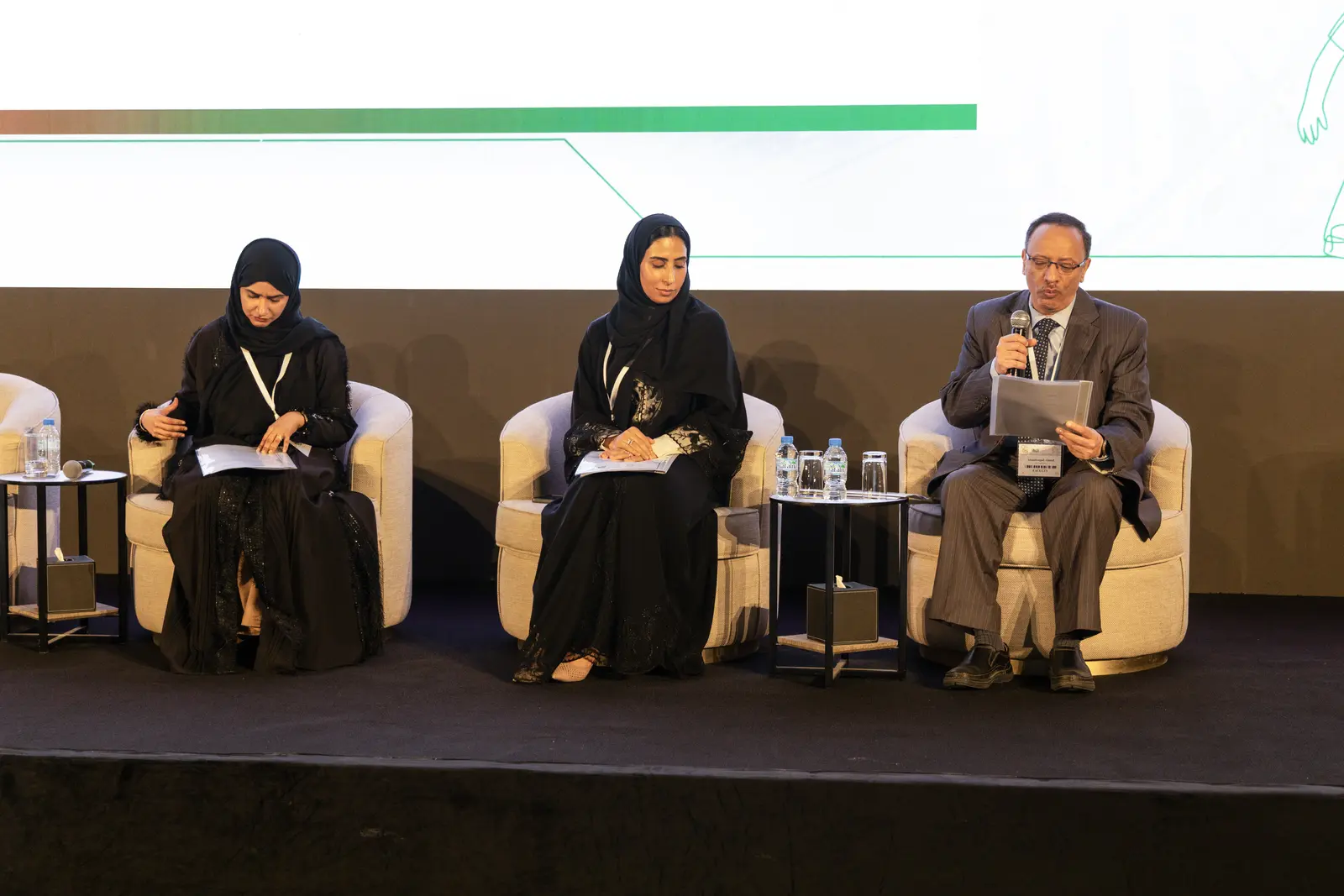
Zarak Events is one option among many. Our creative, content and production capabilities sit under one roof. We plan the stage, the technical system and the guest or delegate operation together, with one team accountable from the brief to the final cue. You can judge whether this suits your event from our selected work, which includes conference production for CSGEF and iPCC 2025, and corporate events for Hilti and Danfoss. If you would like us to be one of the three agencies you brief, send us the brief. We will tell you how we would approach it, including where we think it could be simpler.
Decision checklist
- We know whether our event is mainly management, production, activation or an exhibition stand.
- We have checked the trade licence and insurance of each company on our shortlist.
- We know who owns and operates the production, and who the critical subcontractors are.
- Each agency has told us which permits it expects and who will apply.
- We have seen real photography or film from events like ours, and spoken to a reference.
- All three agencies got the same brief.
- We have compared the quotes line by line, with exclusions listed.
- We have met the person who will run the event on the day.
- The scope, payment stages, change control and cancellation terms are in writing.
No comments yet.