

A conference works when delegates follow the programme, hear every speaker and meet the people they came to meet. Most of that is decided months before the opening session. This guide sets out how to plan a conference in Dubai, step by step, from the first brief to the follow-up after delegates go home.
It covers the goal and the audience, the timeline, the venue and floor plan, the programme and speakers, registration, sponsors, production, streaming and the day itself.
Start with the goal and the audience
Write down why the conference exists in one or two sentences. It might be to share research with an industry. It might be to launch a strategy to partners, or to bring a sector together and sell sponsorship. Each goal leads to a different event.
Then describe the audience. Who are they, how many will come, and where are they travelling from? Senior delegates expect a different pace and level of comfort from a large open audience. International delegates need more notice, visa time and hotel options. A local audience needs a time and place that fits the working day.
The goal and the audience shape every later decision. Keep them in front of the team, the venue and every supplier.
A planning timeline that works
Every conference is different, but most follow the same order. Use this as a starting point and adjust it to your size and dates.
Six months or more before
- Agree the goal, the audience, the budget and the decision makers.
- Choose the dates. Check them against public holidays, Ramadan and other major events in the city.
- Shortlist and book the venue.
- Appoint the event management and production team.
- Draft the programme outline and invite the keynote speakers.
Three to five months before
- Open registration and start delegate communications.
- Confirm speakers and session formats.
- Sell and confirm sponsor packages.
- Draw the floor plan, including the plenary, breakouts, catering and any exhibition zone.
- Agree the stage design, the AV scope and whether sessions will be streamed or recorded.
- Start any permit or approval process that the event needs.
One to two months before
- Lock the programme and publish it.
- Send speaker briefings with content deadlines.
- Confirm catering numbers, signage, badges and staffing.
- Write the run of show.
The final weeks
- Collect and test all speaker content.
- Brief the crew, the hosts and the registration team.
- Hold the build, the technical rehearsal and the speaker walk-throughs.
Choosing the date in Dubai
The conference season in Dubai is busiest from October to March, when the weather is cooler and the city hosts many large events. Venues and hotels book up early in these months. If your dates are flexible, ask the venue which weeks are quieter.
The UAE working week runs from Monday to Friday for the federal government and many private companies. Business audiences usually prefer weekdays. Check whether your audience works a half day on Friday.
Ramadan moves each year, so check the dates before you commit. A conference can still run during Ramadan, but the timings, catering and tone need to change. Our guide to corporate iftar and suhoor events explains how the season affects corporate events.
Choosing the venue
Start with the programme, not the venue brochure. Count the rooms you need, the size of each and how long you need them, including build and rehearsal time. Then look for a venue that fits.
Questions to ask every venue:
- Is the plenary room big enough for the stage, the screens and the seating you want, with clear sightlines from the back?
- How far apart are the plenary, the breakout rooms and the catering? Can delegates move between them in the time the programme allows?
- What are the ceiling height, rigging points and power supply in the main room?
- When can the build start, and when must the room be empty?
- Which AV and catering suppliers must you use, and which can you bring in?
- What are the internet speed and the wifi capacity for the number of delegates?
Hidden costs often sit in the venue contract. Our guide to the venue questions that decide your event budget lists what to check before you sign.
Building the programme
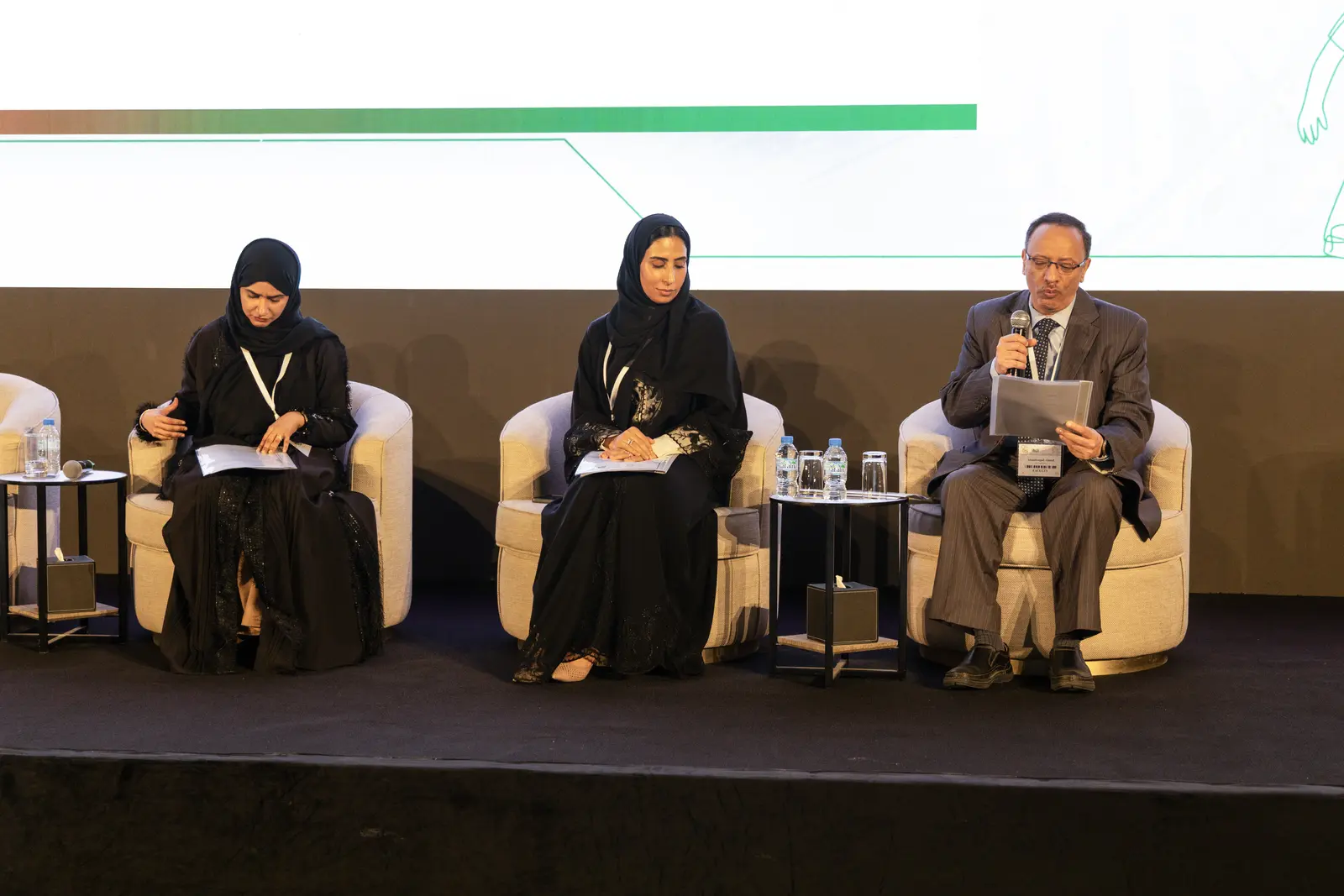
A good programme gives delegates a reason to stay in the room and a reason to talk in the breaks. Mix the formats. Keynotes set the theme. Panels bring in several views. Workshops and roundtables let delegates take part.
Keep sessions to a length people can follow. Leave real time for breaks, because that is where much of the networking happens. Our guide on how to plan a networking event in Dubai covers how to design time and space for conversations.
Plan the changeovers too. Moving from a keynote to a panel of four needs new seating, new microphones and new screen content. Each change takes time on stage, so build it into the programme.
Managing speakers
Speakers need clear information and firm deadlines. Send each one a briefing that covers:
- the session title, length and format
- the audience and what they should take away
- the deadline for slides, videos and any special requests
- the rehearsal time and where to report on the day
- the screen format, so slides fit the screens
Collect all content a few days before the event and test it on the real screens. Late slides cause more problems on stage than almost anything else.
Registration and delegate flow
Registration is the first thing delegates experience. Make it fast. Send joining instructions a few days before, with the address, parking, arrival time and what to bring. Print badges that people can read from a short distance.
On the day, plan the arrival peak. Most delegates arrive in the half hour before the opening session. Staff enough desks for that peak, and add a help desk for questions and changes.
Then plan how people move. Signage, wayfinding and hosts guide delegates between the plenary, breakouts and catering. Delegates who can find the right room without asking feel the event is well run.
Sponsors and exhibition zones
Sponsors want to be seen and to meet the right delegates. Place sponsor areas and exhibition zones on the route delegates already take, such as near catering and between sessions. A stand in a dead corner disappoints the sponsor.
Track every sponsor deliverable against the floor plan and the programme. Logos on screens, mentions from the stage and stand positions should all be agreed early, not added at the end. For custom stands, see our exhibition stand design and build service.
Stage, AV and streaming
The stage and AV decide whether delegates can see and hear the content. Design them for the room and the formats in the programme. A keynote, a panel and a workshop each need a different set-up.
Decide early whether sessions will be streamed or recorded. Streaming needs cameras, a reliable internet line, a technical team and content that works on a small screen. Our conference stage and AV checklist covers what each session format needs.
Permits and approvals
A conference inside a licensed venue is usually simpler than a public event. Temporary structures, outdoor areas, ticket sales or public promotion may need approvals. Check early with the venue and the relevant authority. Our guide to event permits in Dubai explains which authority covers which part of the city.
The run of show and the day itself
The run of show is the minute-by-minute plan that the whole crew works from. It lists every session, walk-on, video, light change and microphone cue. Our run of show template shows how to build one.
Hold a technical rehearsal before delegates arrive. Walk each speaker through the stage, the steps and the confidence monitor. On the day, keep one person in charge of each room and one person in charge of the whole event, with a clear way to reach each other.
After the conference
Send a thank-you email within a few days, with the session recordings or slides if you can share them. Ask delegates, speakers and sponsors for short feedback. Then compare the results with the goal you wrote down at the start.
Photography, session recordings and short films keep the conference working after it ends. Plan them into the run of show, so the key moments are captured from the right positions.
Planning your conference
A well-planned conference feels calm to delegates because the work happened months before. Start with the goal and the audience, book the venue early, plan the programme and the floor plan together, and rehearse. For a shareholder meeting or a company-wide briefing, use our AGM and town hall planning checklist.
To estimate the budget, see what an event costs in Dubai. For help with the full plan, from venue and programme to stage, AV and delegate operations, see our conference event management in Dubai service, or send us your brief.
No comments yet.